Eastern Bus Corridor
Latest update
Consultation update - September 2026
On 2 September 2026, WCC Councillors approved the majority of recommended bus stop and intersection changes for the wider Eastern Bus Corridor Improvements project. In response to community feedback, they deferred the decision on the 11 bus stops on Moxham Avenue and Kupe Street in Hataitai, Rongotai Road in Kilbirnie, and Park Road in Miramar.
WCC and Metlink are reconsulting on proposed changes to 11 bus stops in Hataitai, Kilbirnie and Miramar, following feedback received during the initial Eastern Bus Corridor consultation, held from 19 May to 14 June 2026.
Community feedback showed limited support for the proposed changes to these 11 bus stops but because of their locations and infrastructure, the project team was able to identify alternative proposals for these specific stops. The alternative proposals will be shared for consultation before WCC Councillors make a final decision in December 2026.
Consultation runs from Monday 12 October to Monday 26 October.
For more information and to share your feedback, visit:
Eastern Bus Corridor Improvements | WCC Transport Projects(external link)
Description
Greater Wellington and Wellington City Council are working together to improve bus services across the city. Greater Wellington, through Metlink, operates the bus network, while Wellington City Council manages the roads. The councils are jointly proposing changes to ensure buses run more smoothly, keep up with growing demand and cause less delays for all road users.
Public transport use is growing, especially on busy routes. To keep services moving efficiently, Metlink needs to modify bus stops, so they function as high‑capacity stops. This allows more than one bus to pull in fully at stops and provides better accessibility so people can hop on and hop off quickly and safely whilst at the same time keeping the roadway clear.
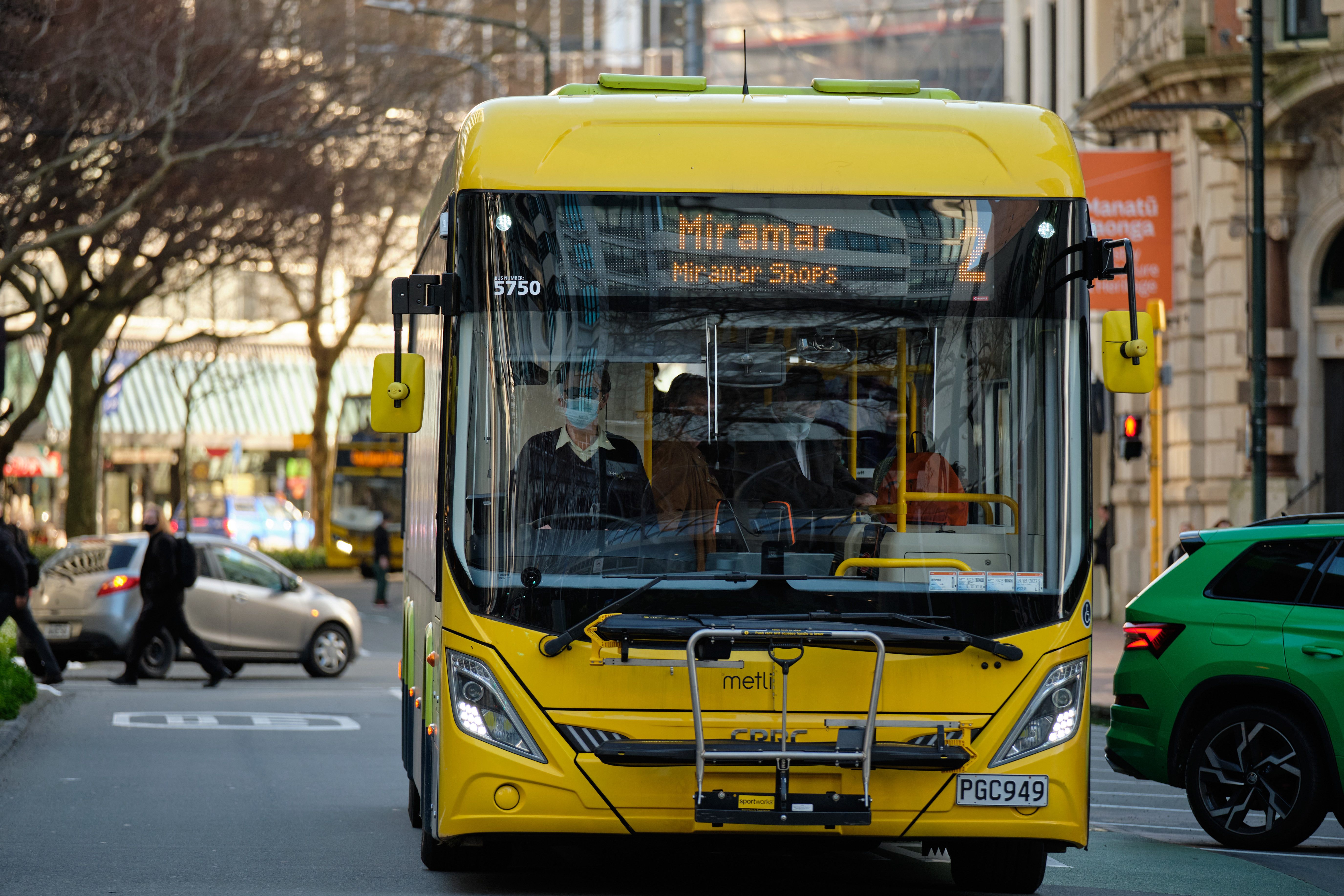
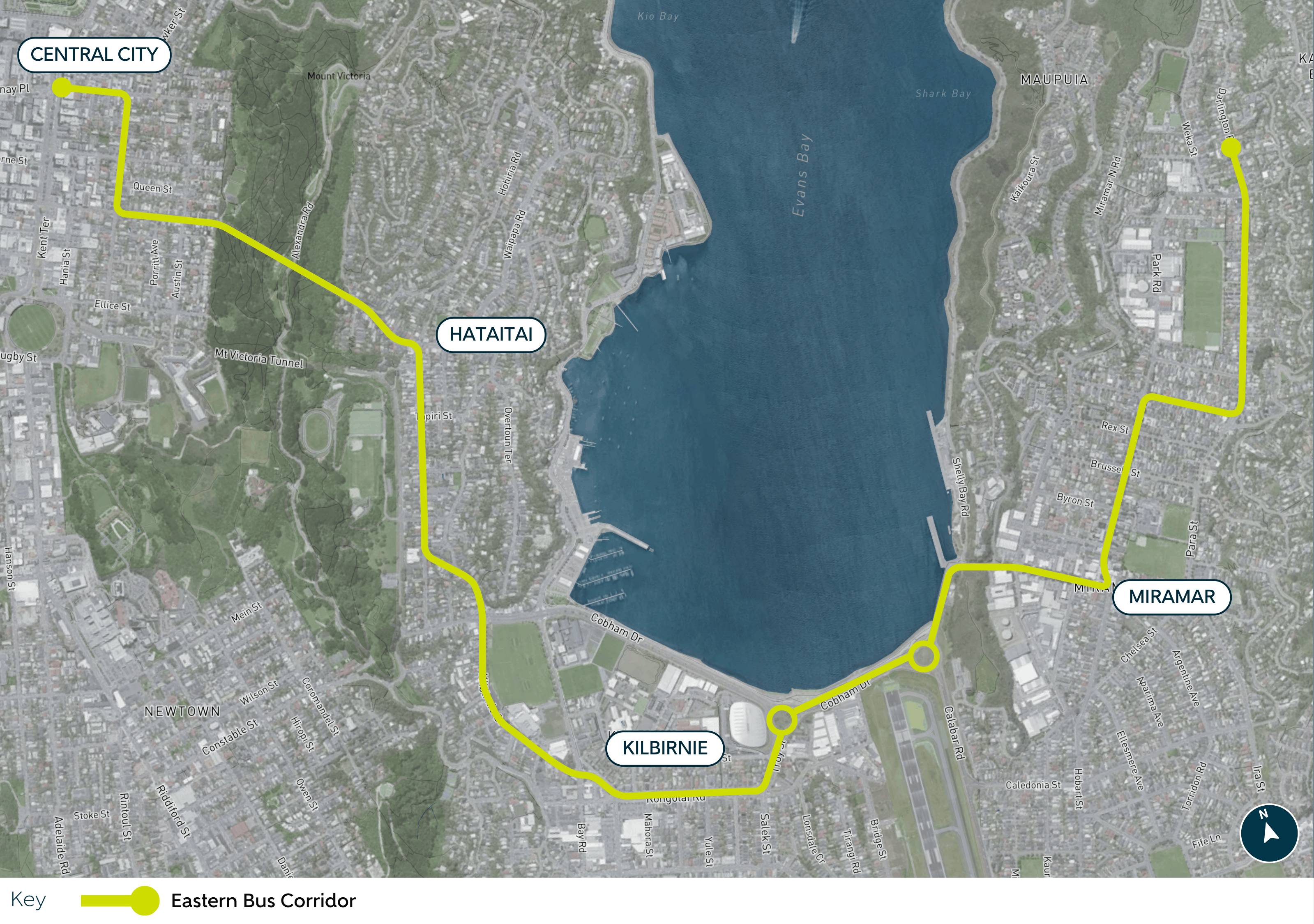
These proposed improvements are part of the Eastern Bus Corridor project. The corridor runs from the central city to Miramar. The Eastern Bus corridor is Metlink’s busiest and most frequent route, carrying a high number of passengers every day. Route 2 is the main service that uses this corridor and links Karori in the west to Miramar in the east via the central city. Other bus routes using this corridor include the 4, 14, 18, 24, 30x, 31x, 35, 36, 38x, AX, and school services.
The bus corridor is already struggling to keep up during busy times, and passenger demand is expected to grow. If approved, these improvements will make it easier for more people to travel reliably and safely during morning and evening peak times.
Background
Current passenger demand for travelling by bus on the Eastern Corridor creates difficulties at bus stops as there are more buses than the current infrastructure can handle. The bus stops are not long enough for more than one bus. This means buses are queueing or stopping in the middle of the road and sometimes leaving passengers behind.
These issues cause safety concerns for passengers and general traffic, reduce the efficiency of service, and result in a reduced level of service for passengers.
Passenger growth on Route 2 (the largest bus service on the eastern corridor with 3.4 million annual passenger trips on the full route from Karori to Miramar/Seatoun in the 2024/2025 financial year) is continuing to increase and to meet demand Metlink needs to operate more buses and/or longer buses. Some intersections need changes to enable the use of longer articulated buses (the preferred solution for providing more bus and passenger capacity).
Partnerships
This project is a joint initiative between Greater Wellington (Metlink) and Wellington City Council with support from bus operator Kinetic. The project budget is $6 million, funded equally by the councils at $3 million each.


Proposed changes
We're proposing a range of infrastructure changes. These changes include:
-
Longer bus stops to accommodate multiple standard buses or an articulated bus in the future
-
Improved bus stop spacing which will result in some bus stops being rationalised (some removed and some slightly relocated to balance the distances between bus stops)
-
Moving bus shelters and real time information displays to align with the front of the lengthened bus stop
-
Minor works at some stops to enable improvements at these stops
-
Intersection changes for improved bus movements
-
Enhanced accessibility features
-
Removal of some car parks while adding back others
Public consultation on these changes will be undertaken from 19 May – 14 June 2026. The feedback submitted through this process will be taken to the Wellington City Council Regulatory Processes Committee for a decision.
This project will go to this Committee in September 2026. Construction would commence following Committee approvals and is anticipated to take up to 12 months.
More information
What changes are proposed from Miramar to the central city?
We will lengthen 35 bus stops so two standard buses or one articulated bus can pull into the kerb, relocate bus shelters and real‑time information displays to the front of the bus stop where needed, remove 11 bus stops and relocate some bus stops slightly to improve bus reliability.
Why are you proposing to change bus stops and intersections?
Many stops are too short for the number of buses we have today, which causes queuing in traffic, delays for passengers and drivers, and safety issues at the kerb. Upgrades also prepare the corridor for larger electric articulated buses so we can carry more people reliably.
When would these proposed changes happen?
Public consultation on these changes will be undertaken from Tuesday, 19 May – Sunday, 14 June 2026. The feedback submitted through this process is then taken to the WCC Regulatory Processes Committee for a decision in September 2026. Construction would commence following committee approvals and is anticipated to take up to 12 months.
Will there be a consultation on the proposed changes for the Eastern Bus Corridor?
Yes, public consultation is planned for 19 May – 14 June 2026.
Where are the proposed planned changes?
Changes will happen between the Miramar terminus (Darlington Road) and the central city. This includes changes from Miramar through Kilbirnie and Hataitai and through Mount Victoria to the central city. The Miramar to Seatoun section is out of scope for now.
What about safety and accessibility?
Longer bus stops mean buses can pull fully to the kerb, reducing the need for passengers to step onto the road. Designs improve boarding for people using mobility aids and enhance safety for everyone near bus stops and intersections.
How is this funded?
The project is jointly funded by Wellington City Council and Greater Wellington with an allocated $6 million budget.
How can I have my say?
A four-week consultation period will run before any decisions are made. You can view plans, attend drop‑ins, and submit feedback online or by email. Details will be published here soon.